Tapera: literature, conflicts, violence, and memories
DOI:
https://doi.org/10.36920/esa33-2_09Keywords:
Conflicts, Literature, Tapera, ViolenceAbstract
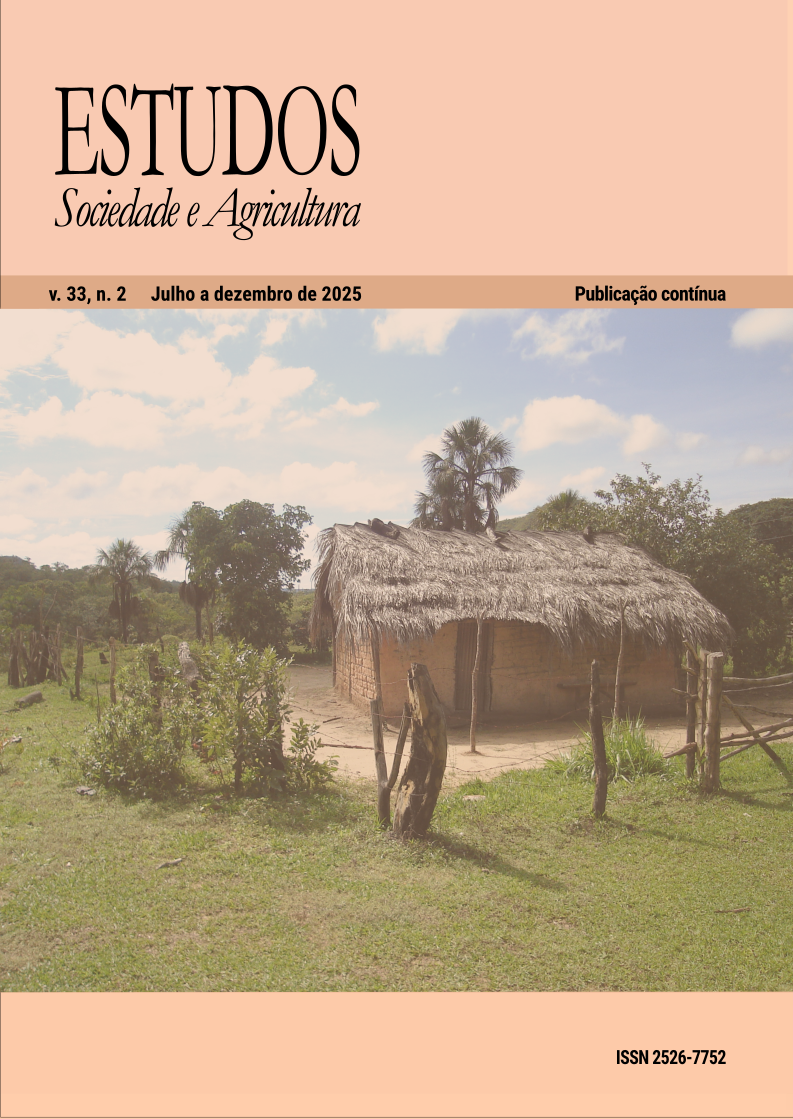
Inspired by the word “tapera” in pioneering 19th-century works that systematized a vocabulary typifying Rio Grande do Sul, this study considered the peculiarities of land appropriation and population sedentarization in the Rio da Prata basin—the Pampa—and investigated, via literary sources published over 100 years ago, the meanings “tapera” offer regarding societal figurations in the period and for contemporary studies. The analyzed texts found four centers of meaning linked to conflict and violence as triggering. An exploratory study of contemporary research also reinforces the conviction that “tapera” operates as a critical icon of memory and violence, especially to study, analyze, and understand processes and policies related to access, appropriation, and enjoyment of land/territories.
Downloads
Downloads
Published
Issue
Section
License
Copyright (c) 2026 Luiz Antônio Bogo Chies

This work is licensed under a Creative Commons Attribution 4.0 International License.
Authors who publish in this journal agree to the following terms:
a) Authors maintain the copyright and grant the journal the right of first publication, with the work simultaneously licensed under the Creative Commons Attribution License which allows the sharing of the work with acknowledgment of authorship and initial publication in this journal.
b) Authors are authorized to take additional contracts separately, for non-exclusive distribution of the version of the work published in this journal (eg publish in institutional repository or as a book chapter), with acknowledgment of authorship and initial publication in this journal.
c) Authors are allowed and encouraged to publish and distribute their work online (eg in institutional repositories or on their personal page) at any point before or during the editorial process, as this can generate productive changes, as well as increase the impact and citation of published work (See The Effect of Free Access).